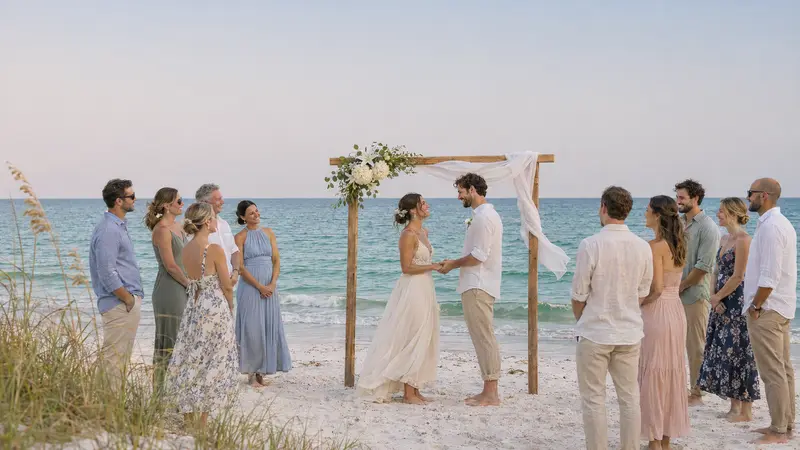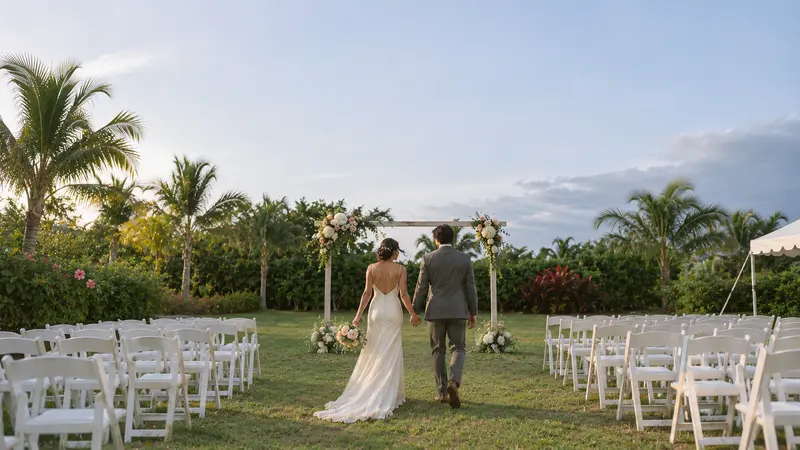
How to Get a Marriage License in Florida: A Step-by-Step Guide
Where to apply, what to bring, the fee, the premarital course, the three-day wait, the 60-day deadline and who can marry you in Florida, based on state law and county clerks.

Your marriage license is the one piece of paperwork every Florida wedding needs, no matter how big or small the celebration. The good news: the process is simple once you know the steps and the deadlines. Here is how it works, based on Florida law and the county clerks who issue the licenses.
1. Where to apply
Marriage licenses are issued by the clerk of court in each Florida county. A license from any county can be used anywhere in Florida, according to the Orange County Clerk of Courts, so you can apply where it is most convenient for you.
2. Who can apply
Both of you must be at least 18. A 17-year-old can marry only with written consent from a parent or guardian and if the older partner is no more than two years older.
You do not need to live in Florida or be a U.S. citizen to get a Florida marriage license.
Both of you must apply together, in person, at the clerk's office. Some counties let you start the application online first.
3. What to bring
A valid photo ID for each of you, such as a driver's license, state ID, passport or military ID.
Your Social Security numbers. Applicants who are not U.S. citizens can provide another identification number instead.
If either of you was married before, the date the last marriage ended, by divorce, death or annulment.
Payment for the fee.
4. The fee
In Orange County, the license costs $86, or $61 if you complete a premarital preparation course, according to the county clerk. Fees and payment options can vary by county, so check with your clerk before you go.
5. The premarital course and the three-day wait
Florida law describes a premarital preparation course of at least four hours, taken together or separately, from a qualified provider. The Orange County clerk says it must be completed within one year before you apply.
If at least one of you is a Florida resident and you do not present a course certificate, the license takes effect three days after you apply. For example, if you get your license on Monday, you can marry on Thursday, according to the Hillsborough County clerk.
If neither of you lives in Florida, there is no waiting period.
The clerk can grant exceptions for hardship, and a judge can waive the wait for good cause.
Keep reading for free
Create your free MarryCast account to read the whole story, save stories and vendors, and request quotes.
6. Use it within 60 days
A Florida marriage license is valid for 60 days from the date it is issued. Your ceremony must take place within that window, so plan when you apply around your wedding date.
7. Who can marry you
Under Florida law, ordained clergy, judicial officers, clerks of the circuit court and notaries public of the State of Florida can perform a marriage ceremony. A notary commissioned in another state cannot. After the ceremony, the officiant must complete the license and return it to the clerk's office that issued it within 10 days.
What to check
Put your license appointment on your calendar: not more than 60 days before the wedding, and at least three days before if a resident is applying without the course.
Confirm your county's fee, documents and hours on the clerk's website.
If you plan to take the course, schedule it early and keep the certificate.
Make sure your officiant is authorized under Florida law.
With these steps checked off, you can focus on what matters most: the day itself.
Sources
- Orange County Clerk of Courts, Marriage licenses
- Hillsborough County Clerk of Court, Marriage license FAQ
- The Florida Senate, Florida Statutes, section 741.04 (issuance of marriage license)
- The Florida Senate, Florida Statutes, section 741.0305 (premarital course)
- The Florida Senate, Florida Statutes, sections 741.07 and 741.08 (who may solemnize)