Drone Shots at Your Wedding? Your Photographer Needs an FAA License. Here Is How to Check
Wedding photographers who fly drones for work need an FAA Remote Pilot Certificate, and drones must be registered and broadcast Remote ID. How to check before you book, and where drones can't fly in Florida.
This is a national story. It may not reflect Florida.
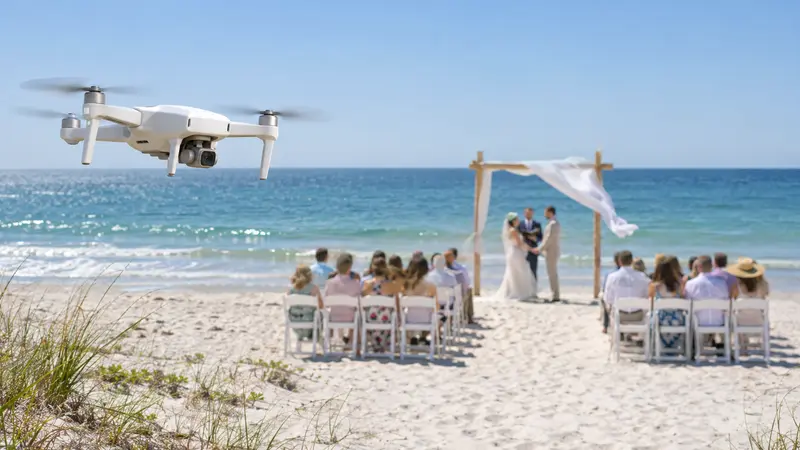
Aerial shots of a ceremony on the beach or a reception under the palm trees can be a memorable extra in a wedding package. But flying a drone for work is regulated by the Federal Aviation Administration (FAA), and a few simple checks can protect your day.
The pilot needs a Remote Pilot Certificate
Under the FAA's Small UAS Rule, known as Part 107, certificated remote pilots can fly drones for work or business. To get the Remote Pilot Certificate, a pilot must pass an FAA knowledge test and be at least 16 years old. A photographer or videographer flying a drone as part of a paid wedding package is flying for work.
You can look up a pilot by name in the FAA's public Airmen Inquiry database. The search does not show certificate numbers, but it shows whether the person holds an FAA certificate.
The drone must be registered and broadcast its ID
Drones flown under Part 107 must be registered with the FAA. Registration costs $5 per drone and lasts three years.
Registered drones must comply with the FAA's Remote ID rule, which means the drone broadcasts its identification and location in flight.
Flying over people is allowed only within FAA categories based on the drone's weight and risk. Sustained flight over an open-air crowd, like a group of guests outdoors, requires Remote ID compliance.
Keep reading for free
Create your free MarryCast account to read the whole story, save stories and vendors, and request quotes.
Where drones can't fly
Drones are generally not allowed in national parks. A 2014 National Park Service policy, still in force with a few exceptions, prohibits launching, landing or operating drones on lands and waters the park service manages. In Florida, that includes places such as Everglades National Park, Biscayne National Park, Dry Tortugas National Park, Canaveral National Seashore and Gulf Islands National Seashore. Near airports, pilots may need FAA airspace authorization.
Other places, such as state parks, city beaches and private venues, may have their own rules. Always check with your venue.
Questions to ask before you book
Do you have an FAA Remote Pilot Certificate? What name is it under?
Is the drone registered, and does it comply with Remote ID?
Have you checked whether drones are allowed at our venue and whether you need airspace authorization?
Do you carry insurance that covers drone flights? Ask the venue whether it requires proof.
What happens if wind or rain makes it unsafe to fly? Put the answer in the contract.
Sources
- Recreational Flyers & Community-Based Organizations (Part 107 vs. recreational flying), Federal Aviation Administration (FAA)
- Certificated Remote Pilots including Commercial Operators, Federal Aviation Administration (FAA)
- How to Register Your Drone, Federal Aviation Administration (FAA)
- Remote Identification of Drones, Federal Aviation Administration (FAA)
- Operations Over People General Overview, Federal Aviation Administration (FAA)
- Airmen Inquiry (search for certificated pilots), Federal Aviation Administration (FAA)
- Uncrewed Aircraft in the National Parks, National Park Service