Florida Law Now Bars Local Permits for Wedding Venues on Farmland. What Couples Should Ask Before Booking
Since July 1, counties and cities may not require a rural event venue permit on land classified as agricultural. For couples, that means asking the venue more questions about sound, access, insurance and neighbors.
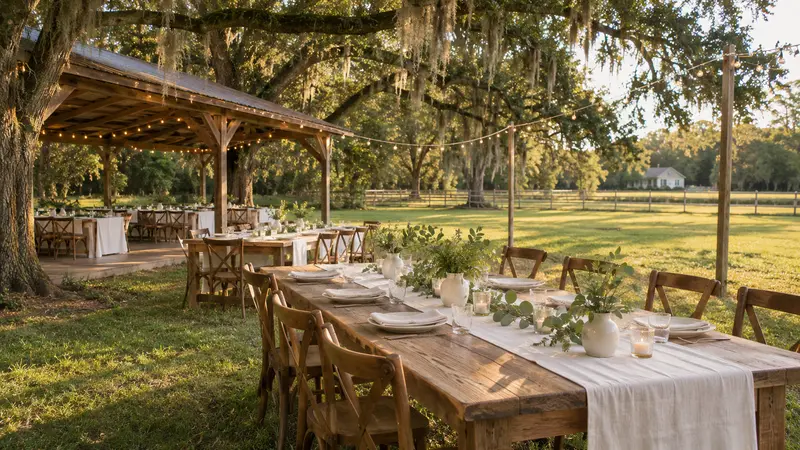
Since July 1, 2026, Florida counties and cities may not require a “rural event venue” permit or license from owners of land classified as agricultural. The change came in the 2026 Florida Farm Bill, SB 290, which Gov. Ron DeSantis signed on March 23. It is now Chapter 2026-3, Laws of Florida.
State law defines a rural event venue as a venue on agricultural land used for special functions “such as weddings, receptions, corporate meetings, or similar gatherings.”
What the law already said
Florida’s agritourism statute already barred local governments from adopting or enforcing rules that prohibit, restrict or regulate agritourism activity on agricultural land. It keeps two exceptions: local governments can still address “substantial offsite impacts” of agritourism and emergencies.
The law also says agritourism does not include building new structures intended primarily to house, shelter, transport or otherwise accommodate the public.
Why neighbors are watching
In April 2026, before the new permit rule took effect, Tampa Bay 28 reported a dispute in Citrus Park, in Hillsborough County, between residents and a wedding venue on an orchid farm. Neighbors complained of loud music and traffic, and county officials told one resident that the venue’s agritourism designation limited the county’s authority, the station reported.
The venue told the station that it monitors sound at every event, ends weddings at 10 p.m. and has never received a violation or noise citation. The two sides are suing each other, and the cases were pending when the report aired. MarryCast takes no side in the dispute and has not reviewed the court files.
Keep reading for free
Create your free MarryCast account to read the whole story, save stories and vendors, and request quotes.
What couples should ask before booking
Ask whether the property has an agricultural classification and whether the venue relies on the agritourism law. County property appraiser records show how a parcel is classified.
Ask, in writing, what time the music must stop, whether there are sound limits and whether the venue has any agreement with neighbors. If a dispute or a court order forces changes, ask what the contract says about moving or cancelling your date.
Ask about parking, the access road and transportation for guests leaving at night.
Ask about insurance. Florida law limits an agritourism operator’s liability for injuries caused by the “inherent risks” of agritourism, such as natural conditions of the land, animals and farm equipment, when the required warning notice is posted. That protection does not cover gross negligence or intentional harm. Ask the venue whether it treats weddings as agritourism, whether it carries liability insurance for events and whether your vendors need their own.
About this story
The legal text comes from the 2026 Florida Statutes, sections 570.85, 570.86 and 570.88, and from the Florida Senate’s record of SB 290. The Citrus Park case is described as reported by Tampa Bay 28.
Sources
- CS/CS/CS/SB 290 (2026): Department of Agriculture and Consumer Services (Chapter 2026-3), The Florida Senate
- Florida Statutes 2026, s. 570.85: Agritourism, The Florida Senate
- Florida Statutes 2026, s. 570.86: Definitions, The Florida Senate
- Florida Statutes 2026, s. 570.88: Liability, The Florida Senate
- Wedding venue sues Florida neighbors over noise complaints while claiming state agritourism protection, Tampa Bay 28 (WFTS)
Related